

Picture someone standing in Dubai Marina, phone in hand, typing “restaurant near me.” Or a resident in Downtown Dubai searching “dentist near me” after a filling comes loose on a Friday night. Or a Business Bay startup founder Googling “SEO consultant Dubai” before their next board meeting.
In every case, Google doesn’t just return a list of ten blue links. It returns a map, three highlighted business listings, and then the regular results underneath. Some businesses show up in that map pack. Most don’t — even ones with much stronger brands, bigger budgets, and nicer websites.
I get asked about this constantly in consultations: “We’re a great business, we have a beautiful website, why aren’t we showing up when people search for us nearby?” The answer, almost every time, comes down to one thing — Local SEO.
This guide explains what Local SEO actually is, how Google decides who appears in those map results, and why it matters more in Dubai than in most other markets. If you’re a business owner trying to work out whether Local SEO deserves a place in your marketing budget, this is written for you. (If you’re still deciding whether to work with an SEO consultant at all, this overview of what an SEO consultant actually does is a good place to start.)
What Is Local SEO?
Local SEO is the practice of optimising your online presence so your business appears when people search for products or services “near” a specific location — whether they type “near me,” a neighbourhood name, or Google infers their location automatically from their phone.
It sits inside the broader discipline of SEO, but it works differently in a few important ways.
Local search is any search with a geographic element — explicit (“SEO consultant JLT”) or implicit (“coffee shop,” searched from a phone in Al Barsha). Google assumes a huge share of searches have local intent even when the word “near me” never appears.
Local intent describes the reader’s underlying goal: they usually want to visit, call, or get directions to a business soon — not read a blog post about the topic. Someone searching “plumber Dubai” tonight probably wants a plumber tonight.
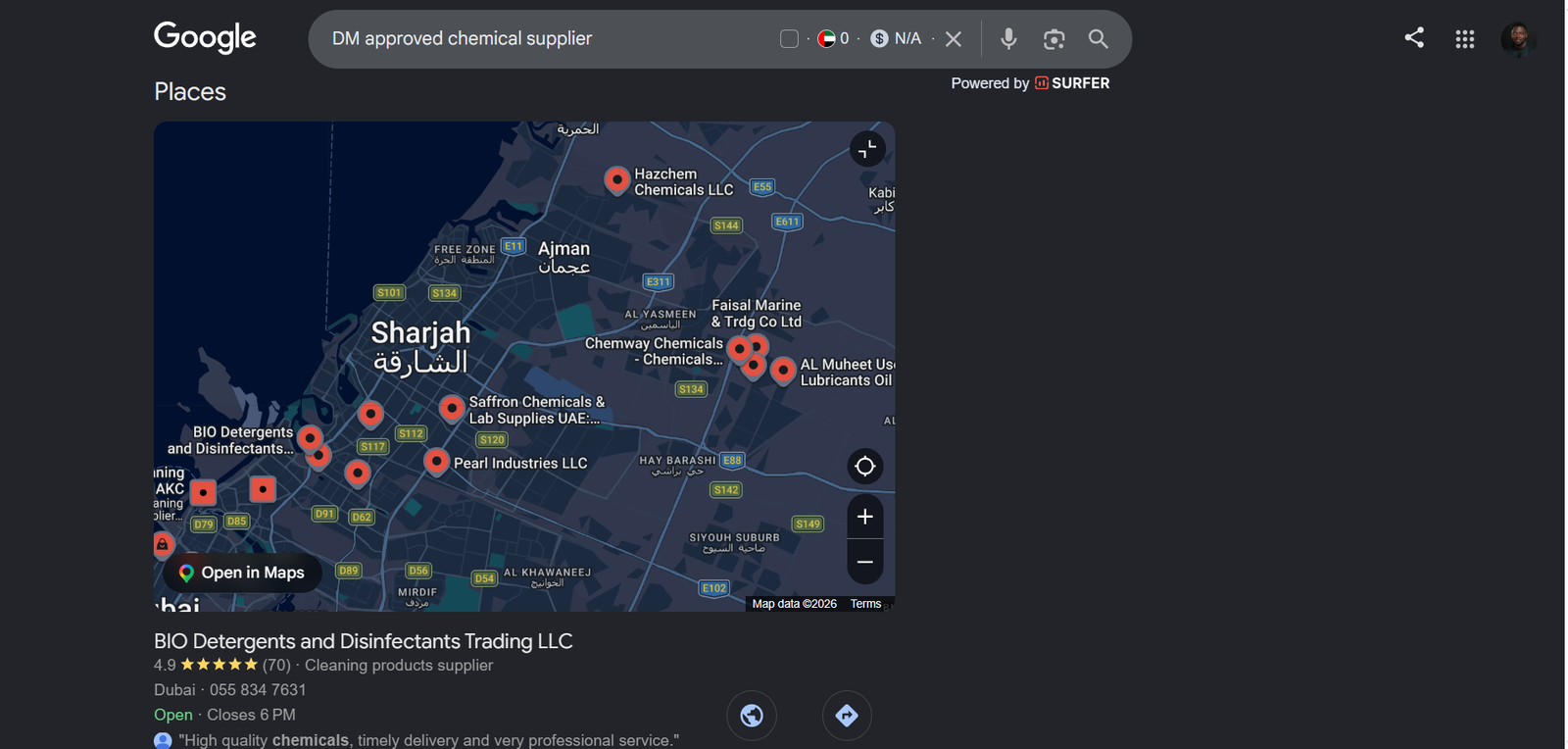
When Google detects local intent, it typically shows three things above the standard organic results:
- A map with pins for nearby businesses
- The Local Pack — three business listings with names, ratings, addresses, and hours
- Organic results underneath, which may also be filtered for local relevance
The Local Pack is the prize most business owners are chasing, whether they know the term or not. It’s the section people tap first, because it answers “who’s closest and best-reviewed” in one glance.
Traditional SEO focuses on ranking a website for a topic, regardless of geography. Local SEO focuses on ranking a business for a topic in a specific place, and it pulls in signals traditional SEO doesn’t touch at all — like your Google Business Profile, your reviews, and how consistent your business details are across the web.
How Local SEO Works
Google has been fairly transparent that local rankings come down to three core factors: relevance, distance, and prominence.
Distance is the one factor you genuinely can’t change — your office is where it is. Relevance and prominence, on the other hand, are almost entirely within your control, and that’s where the actual work of Local SEO happens.
A few of the biggest levers:
Google Business Profile (GBP). This is arguably the single most important asset in Local SEO. Your categories, business description, opening hours, photos, and posts all feed directly into how Google understands and ranks your listing. I still see well-established Dubai businesses with an unclaimed or half-filled-out profile — it’s one of the fastest wins available, and one of the most commonly ignored.
Website optimisation. Your site needs to clearly state what you do and where you do it — on the homepage, and ideally on dedicated location or service pages if you operate in multiple areas of Dubai.
Reviews. Volume, recency, and your response rate all matter. A steady trickle of new reviews tends to outperform a big batch collected once and never touched again.
Citations. These are mentions of your business name, address, and phone number (NAP) on other websites — directories, industry listings, chamber of commerce sites, and so on.
NAP consistency. If your address is written three different ways across five different directories, it creates doubt for Google about which version is correct. Consistency matters more than people expect.
Local backlinks. Links from other Dubai-based or UAE-based websites tend to carry extra local relevance compared to generic global links.
Behavioural signals. Click-through rate, calls generated directly from your listing, and requests for directions all appear to feed back into how Google evaluates prominence over time.
Why Local SEO Matters for Dubai Businesses
Dubai has a few characteristics that make Local SEO more valuable here than in a lot of other cities.
Competition is dense. Dubai has an unusually high concentration of businesses competing in the same categories — SEO consultants, restaurants, salons, clinics, real estate brokerages — often within the same few square kilometres. When ten competitors sit inside one neighbourhood, ranking in the Local Pack becomes the difference between being found and being invisible.
A huge share of the population is transient or mobile-first. Between tourists, new residents, and a workforce that moves between emirates, a large proportion of local searches come from people who don’t already know your business and are searching on their phone, often with local intent built in.
Neighbourhood identity matters. People in Dubai tend to search by area — “Marina,” “JBR,” “Business Bay,” “Al Quoz,” “Downtown” — rather than just the city name. A business that only optimises for “Dubai” broadly is leaving a lot of these searches on the table.
Paid advertising is expensive and getting more expensive. Google Ads costs in competitive Dubai categories have climbed steadily. Local SEO doesn’t replace paid ads, but it builds a channel that keeps producing visibility without a cost-per-click attached to every enquiry.
Long-term compounding. This is a point I make in almost every consultation: paid visibility disappears the moment you stop paying. Local SEO visibility, once built properly, tends to persist and compound — reviews accumulate, citations stay live, and your profile authority keeps building even during quiet months.
One pattern I see constantly with Dubai SMEs, particularly restaurants, salons, and boutique retail: heavy investment in Instagram, almost nothing in Google Maps. Instagram is genuinely useful for brand and community, but it’s a closed platform — it doesn’t help someone who has never heard of you decide where to go right now. A well-optimised Google Business Profile does exactly that, and in my experience it tends to produce leads that convert at a noticeably higher rate, simply because the person searching already has clear intent to buy or visit.
Businesses That Benefit Most
If a real, physical, or service-area address is part of how customers choose you, Local SEO belongs in your strategy.
Local SEO vs Traditional SEO
These two disciplines overlap, but they’re not the same thing, and treating them identically is a common mistake.
Most businesses need both. A strong website with good technical SEO gives Local SEO something solid to build on — but without local-specific work, that same website can be effectively invisible to nearby customers. This is exactly the kind of gap I work through with clients during SEO consulting engagements — figuring out which side of the equation needs attention first.
Core Components of Local SEO
A properly built Local SEO strategy touches several areas at once. None of them work particularly well in isolation.
- Google Business Profile — fully completed, accurately categorised, actively maintained
- Keyword research — identifying how people actually search locally, including neighbourhood variations
- Location pages — dedicated pages for each area you serve, where relevant
- On-page SEO — location and service terms woven naturally into titles, headings, and content
- Technical SEO — a fast, crawlable, mobile-friendly site (Local SEO can’t compensate for a broken foundation)
- Internal linking — connecting location and service pages so both users and Google understand your structure
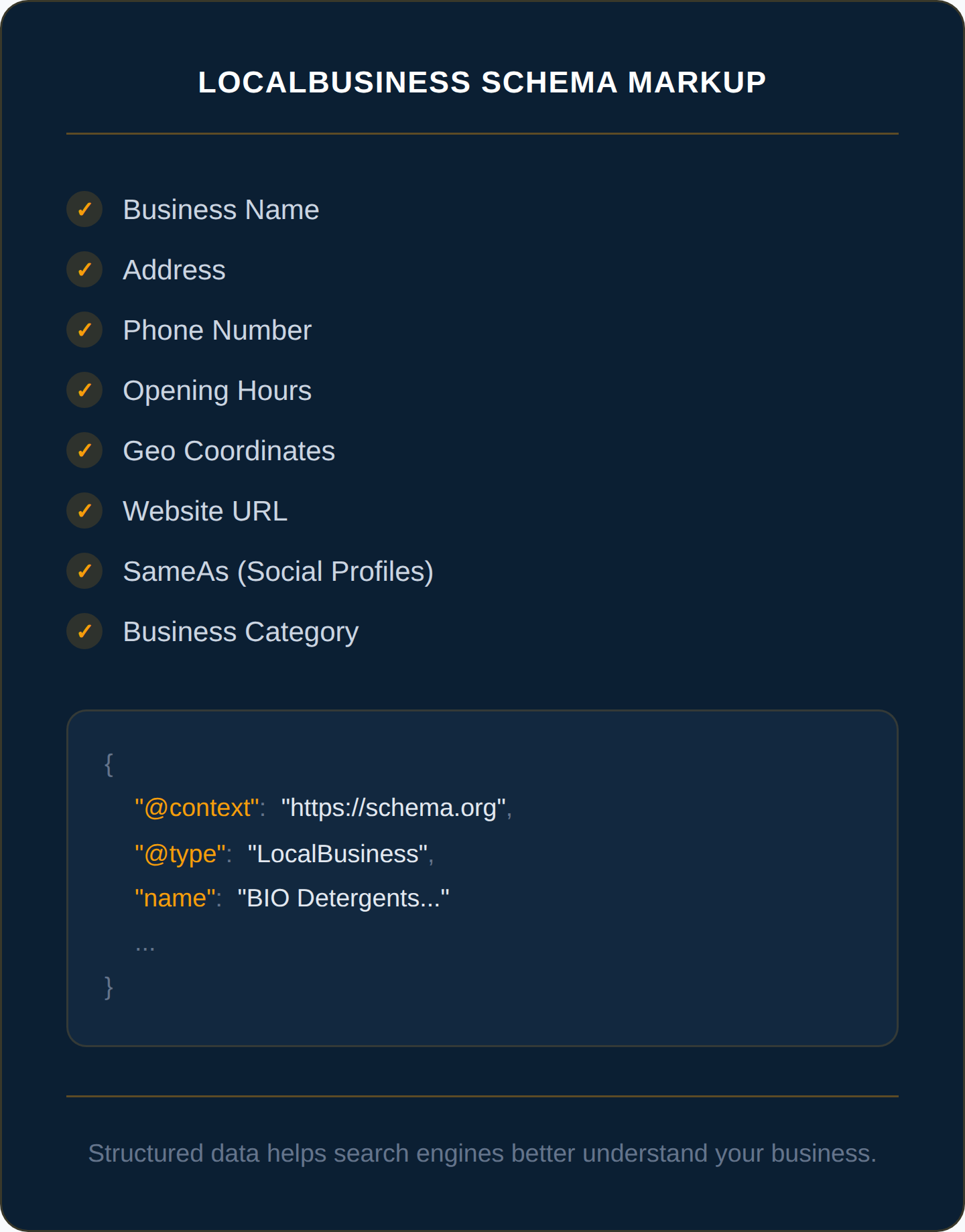
- Schema markup — structured data (LocalBusiness schema, in particular) that helps Google understand your address, hours, and services
- Reviews — consistent collection and response, not a one-off push
- Citations — accurate listings across relevant directories
- Local backlinks — links from UAE and Dubai-relevant websites
- Mobile optimisation — the majority of local searches happen on a phone
- Core Web Vitals — page speed and stability, which affect both rankings and conversion rates
Common Local SEO Mistakes
I see the same handful of mistakes repeatedly across Dubai businesses, regardless of industry.
Most of these aren’t complicated to fix. They’re just easy to overlook, especially for business owners juggling everything else that running a company in Dubai involves.
How Long Does Local SEO Take?
I’ll be direct about this, because it’s the question I get asked most often, and it’s the one area where I see the most unrealistic promises made elsewhere: nobody can guarantee a ranking position, and anyone who does is not being straight with you.
What I can offer is a realistic timeline based on consistent, properly executed work:
Highly competitive categories in dense areas — SEO, real estate, law — tend to sit toward the longer end of that range. Niche or less contested categories can move faster. The honest answer is always: it depends on your starting point, your competition, and how consistently the work gets done.
How to Measure Success
Local SEO produces measurable results, and you shouldn’t have to take anyone’s word for how it’s going. The main tools I rely on:
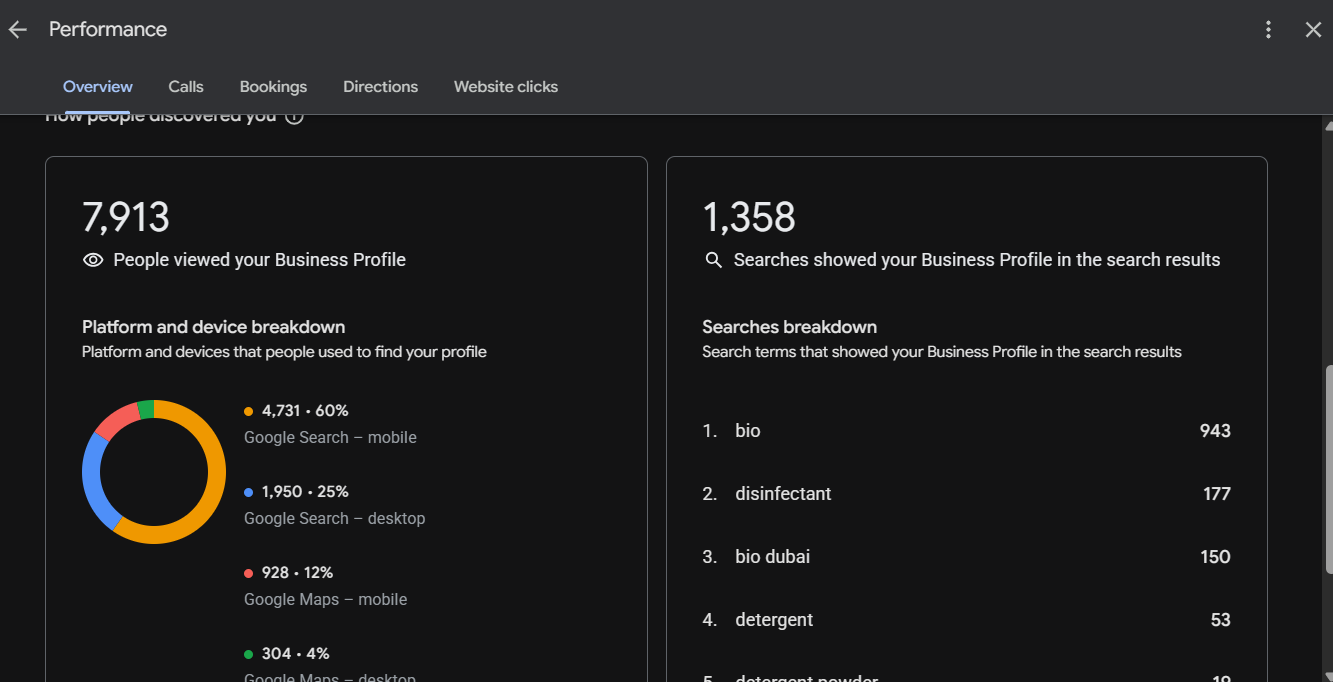
- Google Business Profile Insights — views, searches, calls, direction requests, website clicks
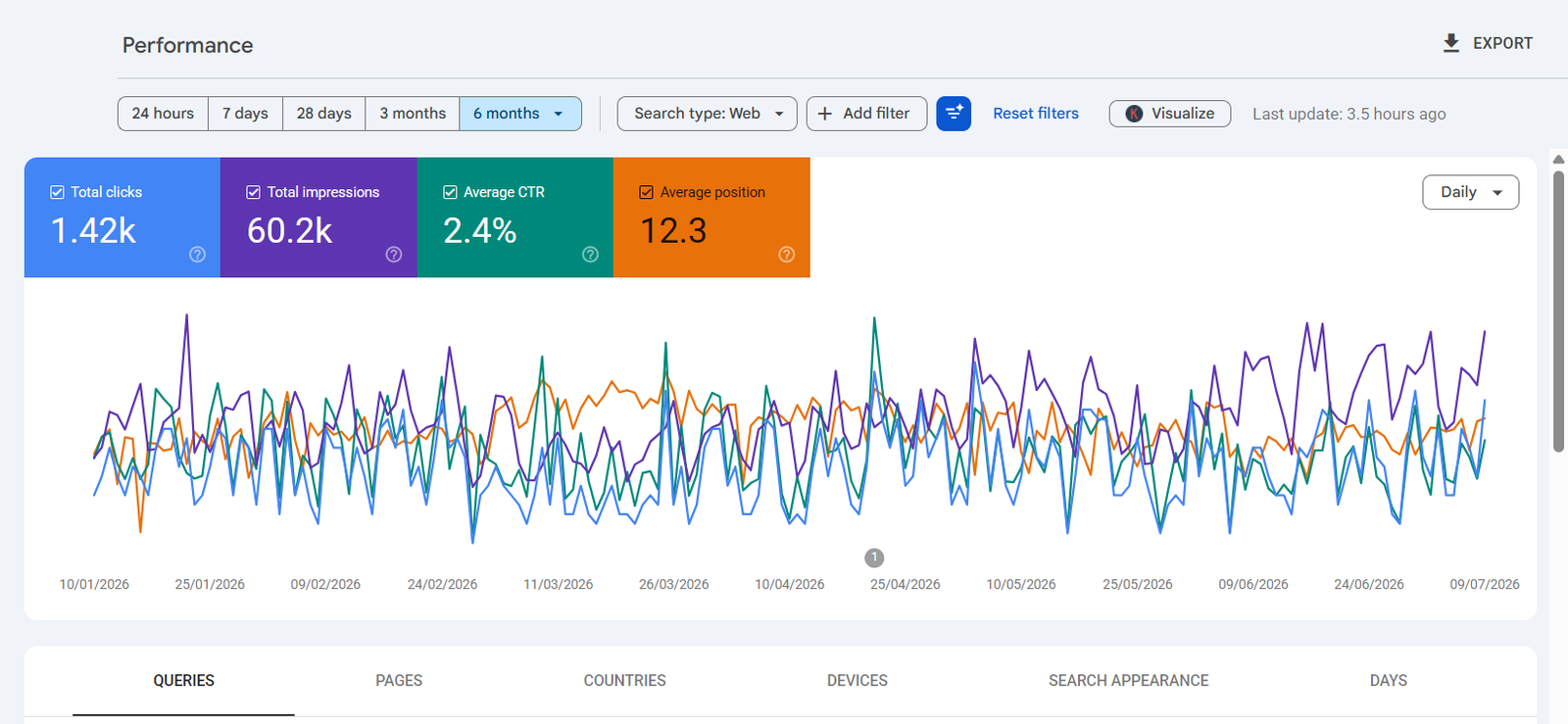
- Google Search Console — which queries you’re appearing for, click-through rates, indexing issues
- Google Analytics 4 — traffic sources, on-site behaviour, conversion tracking
- Direct calls and direction requests — often the clearest sign of real-world demand
- Lead volume and quality — not just traffic, but enquiries that actually convert
- Keyword rankings — tracked over time, for the terms that matter to your business
- Conversion rate — how many visitors take a meaningful action
I’d rather look at a client’s call log and direction requests than a rankings spreadsheet alone. Rankings are a means to an end; leads and revenue are the actual goal.
Frequently Asked Questions
What is Local SEO in simple terms?
It’s the process of optimising your business so it appears when nearby customers search for what you offer — most visibly through Google’s map pack results.
How is Local SEO different from regular SEO?
Regular SEO focuses on ranking a website for a topic anywhere. Local SEO focuses on ranking a business for a topic in a specific location, and relies heavily on your Google Business Profile.
Do I need a physical office for Local SEO to work?
Not necessarily. Service-area businesses without a public office can still rank locally, using a service-area setup on their Google Business Profile rather than a visible street address.
How important is Google Business Profile for Local SEO?
Extremely important. It’s one of the clearest signals Google uses to understand what your business does and where.
How many reviews do I need to rank well?
There’s no fixed number. Review volume, recency, and quality all matter more than hitting a specific target.
Can I do Local SEO myself?
The basics, yes — claiming your profile, keeping details consistent, asking for reviews. Competitive terms in dense Dubai neighbourhoods usually require more structured, ongoing work.
Does Local SEO help with Google Maps rankings specifically?
Yes — Google Maps and the Local Pack draw on the same ranking signals, so Local SEO work improves both simultaneously.
How much does Local SEO cost in Dubai?
It varies significantly depending on competition and scope.
Is Local SEO only relevant for small businesses?
No. Hotels, hospitals, and multi-location retailers all rely heavily on Local SEO — the strategy scales, though the complexity grows with more locations.
What's the biggest Local SEO mistake Dubai businesses make?
Leaving the Google Business Profile incomplete or unmonitored. It’s the highest-leverage, lowest-cost fix available, and it’s routinely ignored.
Does Local SEO work for businesses that also operate online?
Yes. Many Dubai businesses run hybrid models — a physical presence plus e-commerce or online booking — and Local SEO supports the local side without competing with the online side.
How does Local SEO relate to my overall SEO strategy?
It should sit alongside, not replace, broader SEO work. A technically sound, well-structured website makes every local ranking factor easier to improve.
Final Thoughts
Local SEO isn’t a trick or a shortcut — it’s a structured, ongoing effort to make sure Google understands exactly what your business does, where it operates, and why it deserves to be trusted. In a market as competitive and mobile-driven as Dubai, that structure is what separates businesses that show up when it matters from businesses that don’t.
None of this happens overnight, and I’d be doing you a disservice if I told you otherwise. But the businesses I’ve worked with that commit to it consistently — proper profile management, steady reviews, solid technical foundations — tend to build a level of visibility that keeps paying off long after the initial work is done.
If you want a clear picture of where your business currently stands — and what it would take to show up more consistently in Google Search and Google Maps — I offer Local SEO consulting services for Dubai businesses, including a starting-point audit of your current visibility. You’re also welcome to read more about what an SEO consultant actually does if you’re still weighing up whether this is worth investing in right now.
Related reading: SEO Consulting Services · Technical SEO Services · Website SEO Optimisation