
SEO Content Strategy Specialist in Dubai

SEO Content Strategy Dubai — Content That Builds Topical Authority

Most businesses publish content with no structure behind it — no plan, no internal linking, no connection between pages. I build content strategies around topic clusters and topical authority, the same way this site is structured, so every page reinforces the ones around it.

Topical Authority Mapping
Keyword & Intent Research
Content Cluster Planning
Internal Linking Strategy
#1 Ranking achieved with this method
60.2K Impressions reviewed
1,420 Clicks analysed
3-6 mo. To build topical authority

Signs Your Content Needs a Real Strategy

These are planning and structure gaps, not necessarily something broken — if you suspect a technical or on-site issue instead, an SEO Audit is the better starting point.

01

You're Publishing Without a Plan

Content goes out whenever someone gets around to it, with no documented plan, calendar, or strategy behind it.

• No editorial calendar or publishing cadence

• No one owns the content plan long-term

• Publishing happens reactively, not on purpose

02

Your Content Doesn't Connect to Anything

Posts exist in isolation, with no pillar structure tying related topics together.

• No pillar pages tying related content together

• No clear topic structure connecting posts

• Each new post starts from zero authority

03

You're Guessing What to Write Next

When it's time to write, topics get picked on gut feeling rather than a plan tied to search intent or business goals.

• No topic map connecting content to business goals

• Ideas chosen reactively, not strategically

• Unclear which topics actually move the needle

04

You Want to Scale Content but Don't Have a System

You're ready to publish more — more writers, more volume — but without structure, more content just means more chaos.

• Planning to increase content output or bring on writers

• Worried more volume will mean less consistency

• Want a framework in place before scaling, not after

What an SEO Content Strategy Actually Involves

Every strategy is built around your business goals, not a generic content calendar template.

Topical Authority Mapping

Identifying the core topics your business should own, and how they connect — the pillar-and-cluster structure that shows real depth of expertise.

Keyword & Search Intent Research

Finding the terms your customers actually use, at every stage, and matching each one to the right type of content.

Content Cluster & Internal Linking

Grouping related content around pillar pages and linking it deliberately, so no page sits orphaned.

On-Page & Semantic Optimisation

Structuring each page around clear search intent, heading hierarchy, and semantic relevance.

Content Briefs & Editorial Planning

Turning the strategy into practical briefs and a realistic publishing plan, not a document that never leaves the drawer.

Performance Tracking & Iteration

Reviewing what's actually working in Search Console and GA4, and adjusting the plan based on real data.

step by step

My Content Strategy Process

From auditing what exists today to a structured, trackable content plan.

1

Discovery & Content Audit

Reviewing what you've already published, what's ranking, what's ignored, and where the gaps are against your business goals.

2

Topic & Keyword Mapping

Identifying the core topics and search terms that matter for your business, and how they should be grouped into clusters.

3

Cluster & Content Plan

Structuring topics into pillar pages and supporting content, with a realistic internal linking plan tying it together.

4

Content Briefs

Detailed briefs for each piece covering search intent, key points, and internal linking targets.

5

Publish, Track, Refine

Rolling out the plan, monitoring performance, and adjusting based on what's actually working.

Real Results From a Content-Led Strategy
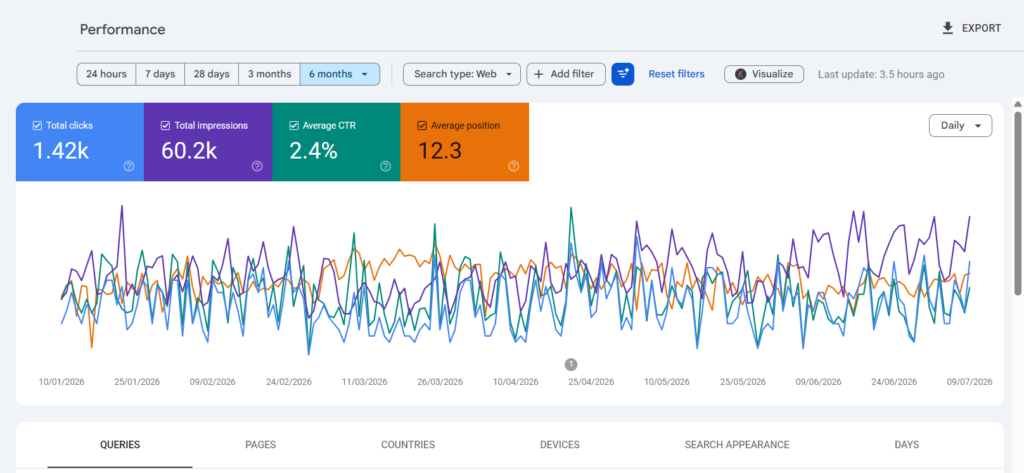
The same structured approach — topic clusters, deliberate internal linking, content built around real search intent — is how this exact methodology has performed in practice.

Google Search Console performance report showing SEO growth achieved by Dubai SEO Consultant with 60,200 impressions, 1,420 clicks, and an average position of 12.3 over six months.

Building Topical Authority for This Site
Applying this same structured, cluster-based approach to my own site's content is a direct part of how it reached and held the #1 ranking for "Dubai SEO Consultant" — proof of the method, not just a claim about it.

#1 Ranking Achieved
60.2K Impressions
1,420 Clicks
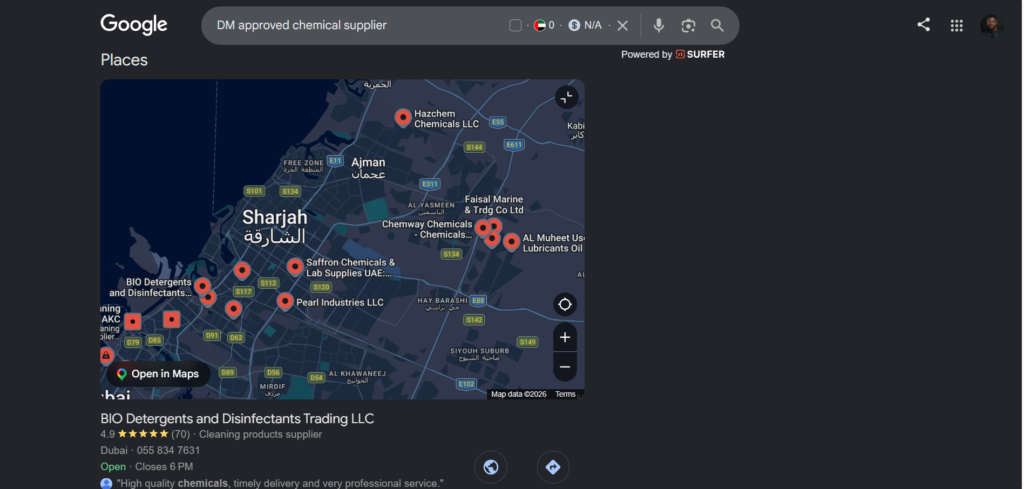
Google Maps showing BIO Detergents and Disinfectants Trading LLC ranking for "DM approved chemical supplier" in Dubai.

Turning Local Content Into Local Rankings

The same content-and-structure approach applied to a client's local SEO content and Google Business Profile helped drive a #1 local ranking and a sharp rise in profile visibility.

#1 Local Ranking
7,913 Profile Views
1,358 Search Appearances

Who a Content Strategy Helps Most

The specifics vary, but these are the most common starting points.

Existing Blog, No Results
Starting Content From Scratch
Scattered, Disconnected Posts
No Internal Linking Structure
Unclear What to Write Next
Content Not Driving Enquiries
Preparing a Site Relaunch
Expanding Into New Topics
Multiple Writers, No Structure
Migrating to a New CMS
Building Topical Authority
Scaling an Existing Strategy

Common Questions

The questions I get asked most about content strategy.

Content marketing is the broader practice of creating content to attract and engage an audience. An SEO content strategy is more specific — it is about structuring that content around topical authority, search intent, and internal linking so it actually ranks and supports your other pages, not just gets published.

It depends on the size of the topic map and whether you need briefs only or full content production. I scope pricing after understanding your goals and current content rather than quoting a flat package upfront — you can see how I generally think about SEO pricing on How Much Does SEO Cost in Dubai?

I can either hand you detailed briefs for your own writers or produce the content directly, depending on what you need. Either way, the strategy and structure behind it is the same.

Early signals — indexing, initial rankings for lower-competition terms — can show within a few weeks of publishing. Meaningful topical authority and ranking improvements typically take three to six months, since it is a compounding process rather than a single fix.

Usually yes, if that blog isn’t structured around clusters and internal linking. Most existing blogs are a good starting point — the strategy work is often more about restructuring and connecting what’s there than starting over.

On-page SEO optimises individual pages you already have. A content strategy operates one level up — deciding what content should exist in the first place, how it is grouped, and how it all links together before the on-page work even starts. See my broader SEO services for how the two fit together.

An SEO audit diagnoses what might be technically or structurally wrong across your whole site — it is the right starting point if something changed or you suspect an underlying issue. A content strategy assumes you already know your content lacks structure and focuses specifically on planning, organising, and connecting what you publish going forward. Many clients do both: an audit first to clear any underlying issues, then a content strategy to build on a clean foundation.

Ready to Turn Content Into a System That Actually Ranks?

If your content is scattered, disconnected, or not producing enquiries, a proper strategy is usually the fastest way to fix that — not more posts, but a structure that makes every post count. I can start with a short discovery call to look at what you've already got.